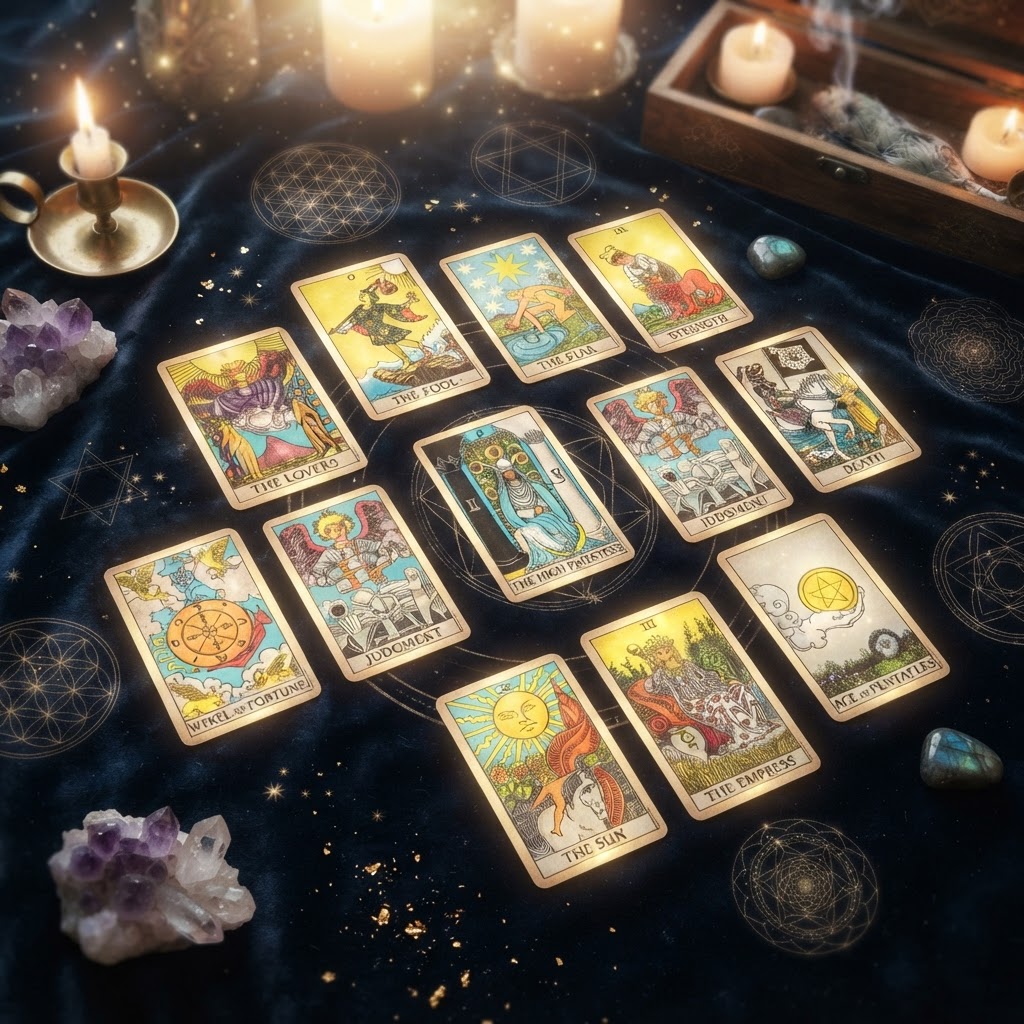
Tarot symbolism is the visual language of the cards, where colors, postures, and objects act as archetypal cues for self-reflection. By observing these details rather than relying solely on memorized keywords, you can develop a more intuitive and personal connection to your readings.
How do I begin interpreting tarot symbolism?
The most effective way to start is by trusting your first impressions. Before consulting a guidebook, look closely at the imagery on the card. Notice which elements draw your eye—is it a specific color, a character's expression, or a recurring object? Many practitioners believe that these initial observations are your intuition speaking, providing a unique layer of meaning that is specific to your current situation.
The role of archetypes
The 78 cards in a deck are divided into the Major Arcana and the Minor Arcana. The Major Arcana represents significant life lessons and archetypal stages of human experience, while the Minor Arcana focuses on the practical, day-to-day aspects of life. Understanding these categories helps you determine whether a card is highlighting a major life shift or a smaller, more immediate challenge.
Why is context important in tarot readings?
A card's meaning is never static; it is shaped by the question you ask and the position the card occupies in a spread. For example, the Eight of Pentacles might suggest diligent skill-building in a career reading, but in a relationship context, it could point to the daily habits that foster trust. Always consider how the surrounding cards interact with one another to create a coherent story rather than viewing them as isolated definitions.
How can I practice reading tarot symbols?
Consistency is key to developing your skills. Start by drawing one to three cards daily and keeping a journal of your observations. Note the symbols that appear and how they relate to your day. Over time, you will notice patterns in how certain images resonate with your personal experiences. If you are looking for a structured way to deepen your practice, you can explore Crystal Heart Academy courses to support your journey.
Frequently asked questions
Do I need to memorize every tarot symbol?
No, memorization is not required. While knowing traditional meanings is helpful, tarot is a reflective practice. It is often experienced as a dialogue between the imagery and your own inner wisdom, which grows more nuanced with practice.
Can tarot predict the future?
Tarot is traditionally understood as a tool for self-reflection and gaining perspective on current life situations. It does not guarantee future events or replace professional advice. Many practitioners use it to organize their thoughts and explore potential paths.
How do I avoid common interpretation mistakes?
Avoid relying on a single keyword for every card. Instead, describe the story you see in the image and consider how it applies to your specific question. If you feel stuck, take a moment to breathe and trust your initial impressions.
To continue your journey into intuitive development and spiritual growth, we invite you to visit the Crystal Heart Academy blog for more insights or learn more about our approach to spiritual education.